

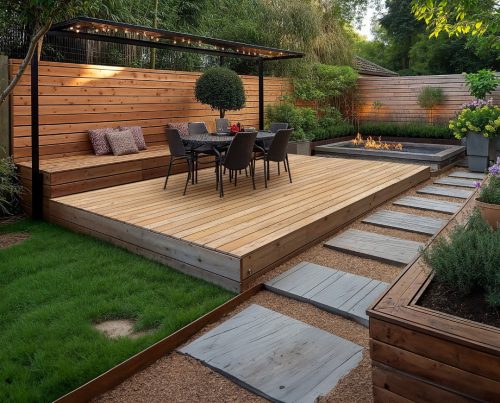
Your fence is more than just a barrier; it’s an extension of your home’s style and a key element of your outdoor living space. Choosing between horizontal and vertical wood fences depends on the look you desire, your priorities for privacy and security, and even your landscape. Let’s break down the pros and cons of each type to help you make the perfect pick.
Horizontal Horizons:
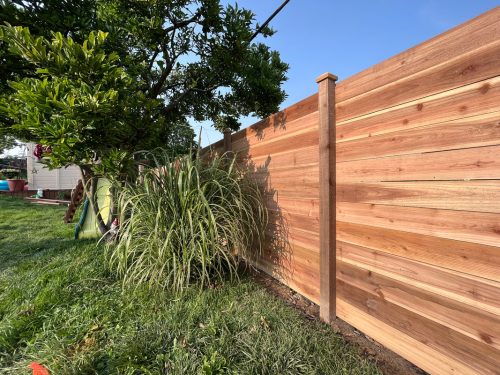
- Modern Marvel: Horizontal fences boast a clean, contemporary aesthetic that complements modern and minimalist homes.
- Less Lumber, Lower Cost (Maybe): Since they don’t require horizontal rails (stringers), they potentially use less wood. However, higher quality lumber is needed to prevent sagging, which can offset the cost savings.
- Weather Woes: With the board ends facing outward, horizontal fences are less susceptible to water damage compared to vertical fences.
- Privacy peek-a-boo: Even closely spaced boards leave a sliver of visibility, so keep this in mind if complete privacy is a major concern.
- Climbing Challenge: The horizontal slats can act like rungs, making it easier for determined climbers to scale the fence.
Vertical Vantage:
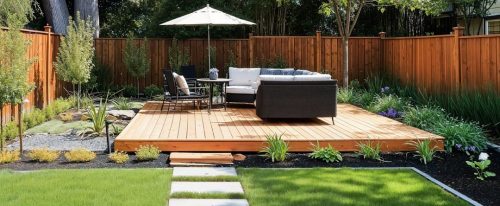
- Traditional Touch: Picket fences are a timeless choice, offering a classic look that complements various architectural styles.
- Privacy Plus: Vertical boards placed close together create a solid barrier, blocking unwanted views and providing a greater sense of seclusion.
- Security Strength: The lack of footholds makes vertical fences more difficult to climb, deterring potential trespassers.
- Sloped Ground Savior: Vertical fences can be staggered to follow uneven terrain, making them ideal for properties with slopes.
- DIY Delight: Vertical fences are typically sold pre-built in panels, simplifying installation for do-it-yourselfers.
Beyond the Basics
Whichever style you choose, consider these additional factors:
- Local Restrictions: Some Homeowner Associations (HOAs) have guidelines on fence style and materials. Be sure to check any regulations before you start building.
- Material Matters: Cedar, redwood, and pressure-treated pine are all popular choices for wood fences, each with varying degrees of durability and cost.
- Long-Term Maintenance: Both horizontal and vertical fences require regular cleaning and staining to maintain their appearance and longevity.
Ultimately, the best fence is the one that best suits your needs and preferences. By considering the factors above, you can create a beautiful and functional privacy barrier that enhances your property for years to come.
Discover more from CheaperFence
Subscribe to get the latest posts sent to your email.

